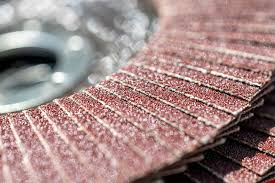
Coated abrasives—commonly known as sandpaper—are essential tools in finishing, smoothing, shaping, and prepping surfaces across woodworking, metalworking, automotive, and DIY applications. Unlike bonded abrasives or grinding wheels, coated abrasives use abrasive grains attached to a flexible backing, allowing for more controlled surface finishing.
The key to getting excellent results is selecting the right abrasive grain, backing type, coating, and grit size for your task.
🔹 Aluminum Oxide Sandpaper
- Why use it? Tough, durable, and long-lasting due to its self-sharpening qualities.
- Best for: General-purpose sanding, especially for wood and metal.
- Use on: Hardwood, softwood, steel, painted surfaces.
- Finish: Medium to fine depending on grit.
- Notes: Available in sheets, discs, belts, and sponges. Great for power or hand sanding.
🔹 Silicon Carbide Sandpaper
- Why use it? Very sharp and hard; cuts quickly.
- Best for: Wet or dry sanding, especially on hard or smooth surfaces.
- Use on: Plastics, fiberglass, glass, ceramics, non-ferrous metals, stone.
- Finish: Fine and consistent.
- Notes: Ideal for final sanding and automotive bodywork. Wears faster than A/O.
🔹 Garnet Sandpaper
- Why use it? Natural grain that gives a smooth finish.
- Best for: Fine woodworking and finishing tasks.
- Use on: Softwoods, hardwoods, hand sanding between coats.
- Finish: Clean and polished.
- Notes: Wears out faster than synthetic abrasives, but produces a smoother finish on wood.
🔹 Zirconia Alumina (Zirc)
- Why use it? Extremely durable; designed for heavy-duty applications.
- Best for: High-pressure grinding and stock removal.
- Use on: Metal, hardwood, and composites.
- Finish: Coarse to medium.
- Notes: Great for belts and discs on aggressive sanding jobs. Lasts much longer than A/O under pressure.
🔹 Ceramic Alumina Sandpaper
- Why use it? Ultra-tough, micro-fracturing grain for long-lasting sharpness.
- Best for: Heavy material removal, especially on metal.
- Use on: Stainless steel, high-alloy steel, hard wood.
- Finish: Coarse to medium, depending on grit.
- Notes: More expensive but ideal for industrial and high-demand applications.
🔹 Emery Cloth
- Why use it? Flexible and strong, ideal for metal polishing.
- Best for: Rust removal and polishing on metal.
- Use on: Steel, iron, and other ferrous metals.
- Finish: Smooth.
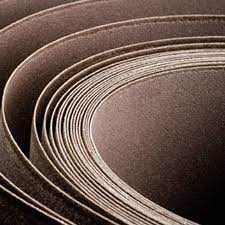
- Notes: Often used in narrow rolls for plumbing and mechanical tasks.
🔹 Non-Woven Abrasives (Scuff Pads)
- Why use it? Doesn’t scratch or remove material aggressively.
- Best for: Surface prep, blending, cleaning, and finishing.
- Use on: Metal, wood, composites, painted surfaces.
- Finish: Satin to polished.
- Notes: Used where a consistent finish without deep scratches is needed—great for in-between coats or cleaning oxidation.
📊 Quick Reference Table:
| Abrasive Type | Best Used On | Key Benefit | Finish Type |
|---|---|---|---|
| Aluminum Oxide | Wood, metal, paint | Durable & versatile | Medium–fine |
| Silicon Carbide | Plastics, fiberglass, auto body | Sharp, works wet or dry | Fine |
| Garnet | Wood (manual sanding) | Smooth, natural finish | Smooth-polished |
| Zirconia Alumina | Metal, hardwood | Long life under pressure | Coarse–medium |
| Ceramic Alumina | Stainless, hardwood, high-alloy | Fast cut, long life | Coarse–medium |
| Emery Cloth | Ferrous metals | Flexible, great for polish | Smooth |
| Non-Woven (Scuff) | Metal, wood, paint | No scratching, good for prep | Satin/matte |
🧵 Backing Types
Mesh/Screen: Open structure, reduces clogging. Great for drywall and paint removal.
Paper (A–F weight): Common for general sanding. “A” is light and flexible; “F” is heavy-duty.
Cloth (J, X weight): Durable and tear-resistant. Often used in belts and discs.
Film: Thin, waterproof, and uniform—great for fine finishes.
Foam/Sponge: Conforms to contours and used for hand sanding curved
surfaces.
🔢 Grit Size Overview
| Grit Range | Type of Work | Typical Use Cases |
|---|---|---|
| 24–40 | Coarse | Paint, rust, or stock removal |
| 60–80 | Medium | Surface prep, smoothing, shaping |
| 100–150 | Fine | Final shaping, surface blending |
| 180–220 | Very Fine | Between coats, light finishing |
| 320+ | Extra Fine/Super Fine | Final sanding, polishing, high-gloss prep |
⚙️ Choosing the Right Coating
- Open Coat: Fewer abrasive grains per area—prevents clogging on softwoods, paint, or resin.
- Closed Coat: Full coverage—more aggressive cut. Best for metals and hardwoods.
- Stearated: Coated with anti-clogging agent (usually white)—ideal for painted surfaces and soft wood.
Final Thoughts
Sandpaper and coated abrasives are more than just sheets—they’re precision tools. Choosing the right combination of grain, grit, backing, and coating can make a dramatic difference in the quality, speed, and safety of your work.
If you’re working on a specific project—whether it’s prepping a metal chassis or finishing a fine hardwood cabinet—I’d be happy to recommend the best sandpaper setup for the task. Just let me know!
🛡️ Safety & Usage Tips
- Use dust extraction or a vacuum when possible—especially with fine grits.
- Always sand with the grain (especially on wood) to avoid scratching.
- Let the abrasive do the work—excessive pressure reduces life and worsens finish.
- Match the abrasive to the tool (e.g., use hook-and-loop discs for orbital sanders).